Every job below is one we do ourselves across Kirkland.
We dig footings below the frost line, usually 18 inches here in King County, and set posts on concrete piers before a single joist goes up. Framing gets joist hangers rated for treated lumber so the galvanizing doesn't eat away in a few years. You get a deck that doesn't bounce when your kids run across it.
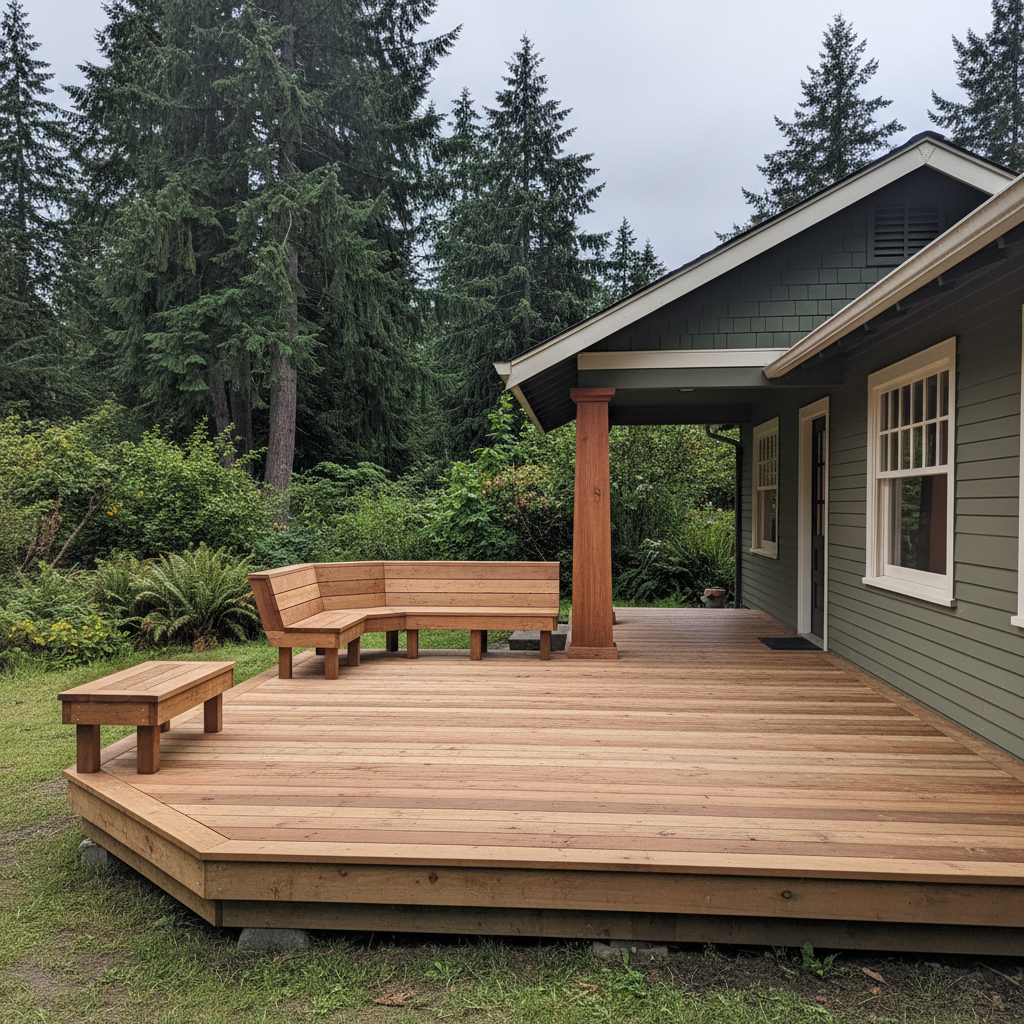
Some decks need to wrap around a corner, drop down to a fire pit, or work around an existing patio slab. We draw the layout to scale before we touch wood, so you know where the stairs land and how wide the walkway to the gate really is. Multi-level decks and built-in bench seating usually start here.
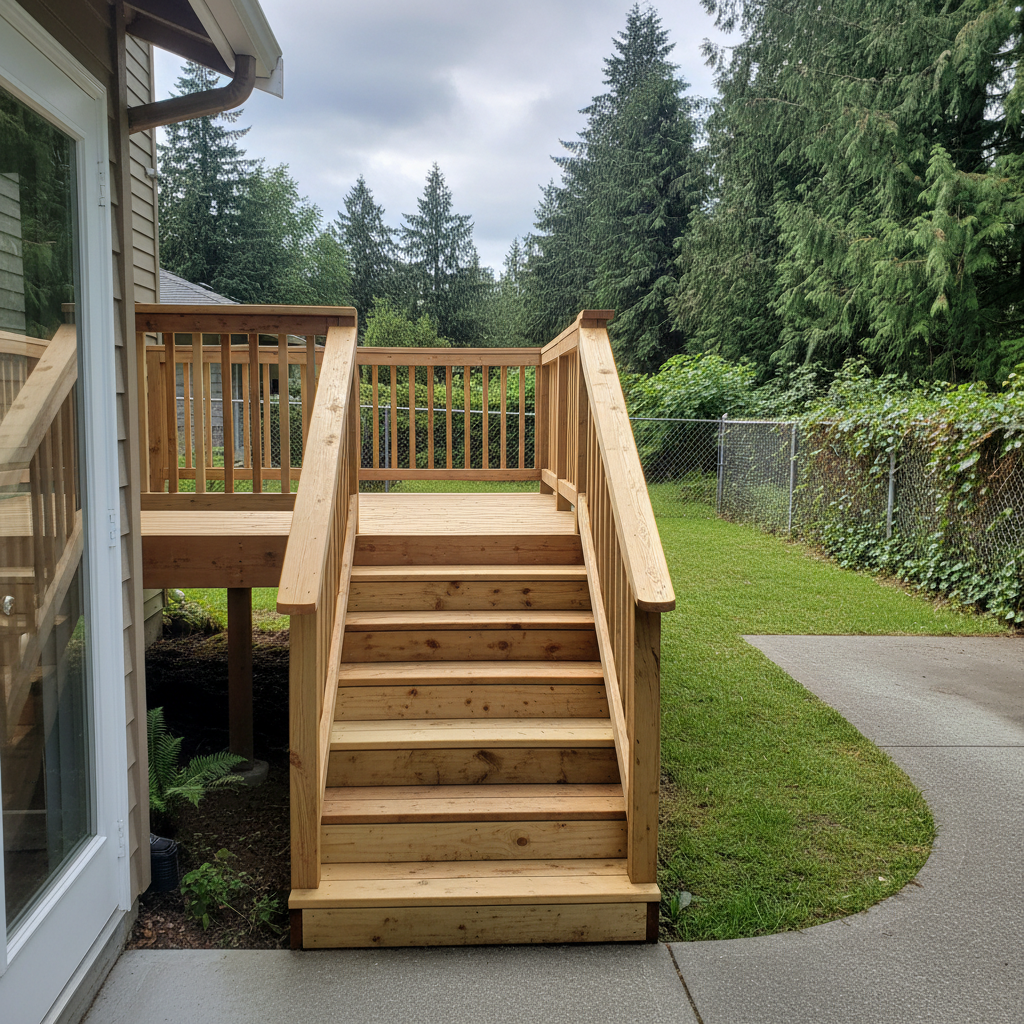
Soft spots in the decking, a railing that wiggles, stairs that have started to pull from the stringer, that's most of what we get called out for. We pull boards back far enough to see if the joists underneath are still sound or if rot has gotten into the framing. A repair only makes sense if the bones are good; if they're not, we'll tell you it's time to rebuild instead of patching over it.
Cedar and pressure-treated decking both need a fresh coat of sealer every one to two years out here, more often on a deck that gets full sun or sits under fir trees dropping sap. We pressure wash first at a low enough PSI that we don't chew up the wood grain, then let it dry a full day or two before any stain goes on. Skip this step long enough and the boards start cupping and checking, which costs a lot more to fix than a weekend of staining.
If the frame is still solid but the decking boards are splintering, cupping, or just look tired, we strip them off and leave the substructure in place. New composite or cedar boards go down with proper gapping for seasonal movement, so you're not paying for a full rebuild you don't need. This usually runs a fraction of the cost of tearing out the whole structure.
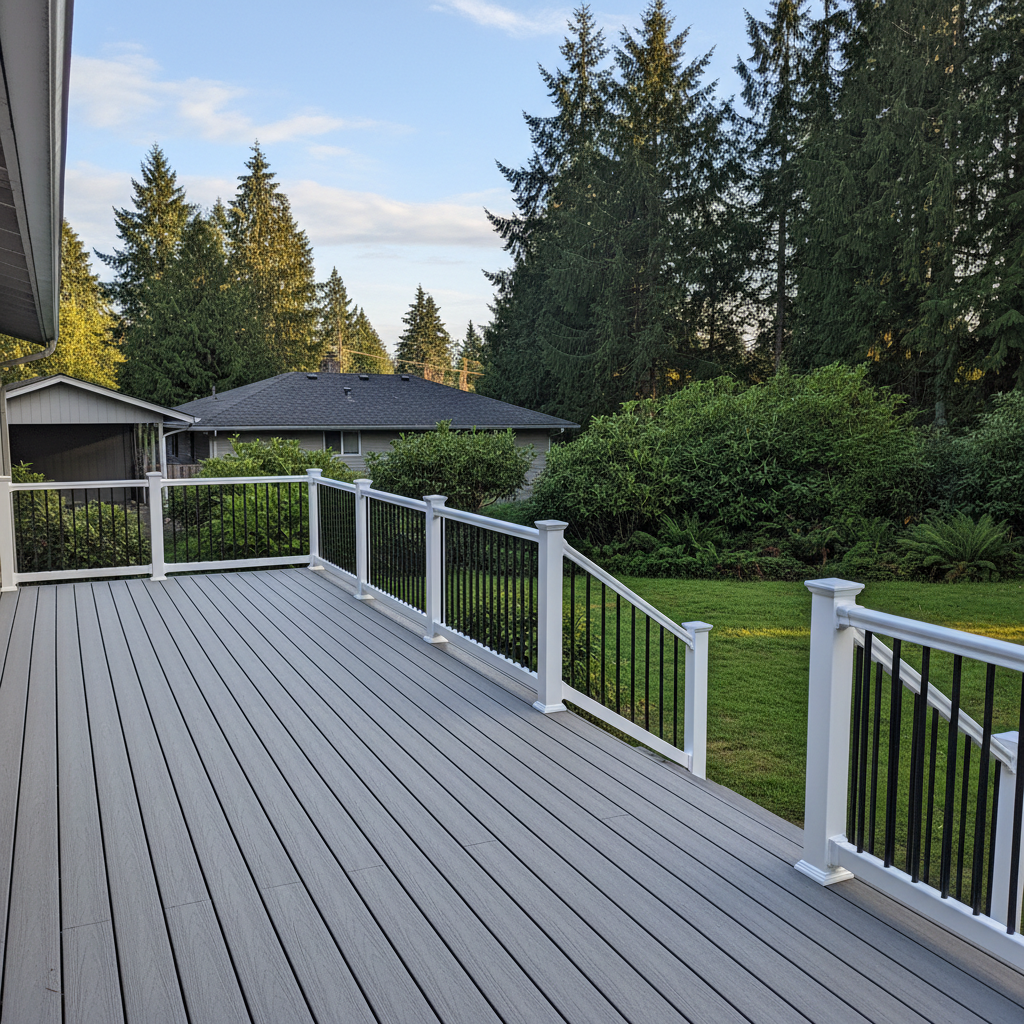
Composite decking like Trex or TimberTech costs more up front than pressure-treated lumber, but you're not restaining it every other summer. We still use pressure-treated or steel framing underneath, with hidden fastener systems on top, so there are no screw heads to catch a bare foot on. Good for anyone done with the maintenance side of deck ownership.
Washington code calls for 36-inch railings on most residential decks, 42 inches if your deck sits over a certain height, and baluster spacing that keeps a 4-inch sphere from passing through. We replace loose posts, rotted top rails, and cable railing that's gone slack, or build the whole railing system fresh. A railing that fails is the one safety item we won't let slide on a repair job.
Some decks aren't worth saving, usually because the ledger board has rotted where it meets the house or the footings were never sized right in the first place. We tear it out down to clean ground, haul the debris, and start over with proper flashing at the ledger so water doesn't get behind it again. It costs more than a repair but it's the only honest answer for a deck that's failing structurally.
Sloped backyards around Kirkland and the Eastside often call for a deck that steps down in two or three levels instead of one flat platform. Each level needs its own set of footings and beams sized for the span, and the stairs between them have to meet the same rise-and-run rules as any other stairway. We work with whatever grade you've got instead of trying to flatten it.
A lot of our deck builds end with a pergola or partial roof over part of the space, since Kirkland gets enough rain that an uncovered deck sits empty half the year. We tie the structure into the deck framing with posts sized to carry real snow load, not just decorative 4x4s. Covered decks also hold up better over time since the decking underneath isn't taking constant direct rain.
Four steps, and no surprises in any of them.
You tell us what you want doing, we look at what is actually there, and we ask the awkward questions early.
In writing, itemised, free. If something might add cost later we flag it now rather than at the end.
Same crew throughout. We cover your floors, keep the dust down and tidy up before we leave each day.
You point out anything you are not happy with and we fix it before the invoice, not after.
Based in Kirkland and working throughout the surrounding Eastside.
Questions that come up once a deck project is underway.
Describe the problem and we will tell you what it probably is. No obligation.